Whether you’re delivering disability support services under the NDIS or providing care through the aged care sector, an audit is a crucial part of maintaining compliance and demonstrating quality care. While many providers focus on policies, procedures, and documentation, one of the most important areas auditors examine is staff training.
Effective staff training does more than satisfy compliance requirements, it helps ensure clients receive safe, respectful, and high-quality support. The good news is that with the right systems and training programs in place, such as training through Skills Centre Australia, providers can approach audits with confidence.
In this article, we’ll explore what auditors commonly look for in staff training and how organisations can achieve audit ready training throughout their workforce.

Why Staff Training Matters During Audits
Auditors are tasked with verifying that organisations are meeting their obligations under relevant standards and regulations. Whether the audit is conducted against the NDIS Practice Standards, the Aged Care Quality Standards, or another compliance framework, staff competency is always a key focus area.
Training records provide evidence that workers have the knowledge and skills required to perform their roles safely and effectively. Auditors want to see that staff are not only trained but that their training is relevant, current, and aligned with the services they deliver.
Frequent training like through Skills Centre Australia, demonstrates a commitment to quality care, risk management, and continuous improvement.

Person-Centred Care Training
One of the most common areas auditors examine is how staff support person-centred care.
Person-centred care places the individual’s preferences, rights, goals, and choices at the centre of service delivery. Auditors often look for evidence that workers understand and apply these principles in their daily practice.
Skills Centre Australia’s Introduction to Support work course focuses on person-centred care. The training covers, informed consent, dignity and respect, privacy and confidentiality, choice and control, cultural awareness, human rights and advocacy and effective communication
Staff should understand how to obtain consent before providing support, respect a person’s dignity during personal care, and promote independence wherever possible.
When organisations invest in person-centred training, they create a workforce that is better equipped to meet both compliance requirements and client expectations.

Training for Specific Tasks and Responsibilities
Auditors also assess whether staff have received training appropriate to the tasks they perform.
A common example is medication administration. If a support worker is responsible for assisting with or administering medication, auditors will typically expect evidence that the worker has completed appropriate medication training and competency assessments.
Other examples may include manual handling or any lifting or transfer tasks. Infection prevention and control for any personal care or support that has a potential for a bodily fluid exposure risk. First Aid and CPR for basic support assisting in home and community settings. PEG or PEJ feeding training for any enteral feeding supports. Epilepsy and seizure management training to assisting clients with epilepsy. Diabetes training for supporting clients with managing their diabetes. Or Dementia training for assisting elderly clients with cognitive decline, and memory issues.
A key focus auditors look for is alignment between training and duties. If a worker is performing specialised tasks, there should be documented evidence that they have been trained and assessed as competent. Skills Centre Australia offers industry recognised training to keep your workforce compliant and job ready.

Evidence of Competency
Completing a course is only part of the picture.
Increasingly, auditors are looking for evidence that workers can apply what they have learned in practice. This is particularly important for higher-risk support activities.
Competency evidence may include practical assessments or workplace observations. Many of Skills Centre Australia’s courses have practical elements that include a final assessment before being deemed competent. By challenging our students when they are learning, we can ensure a consistent quality from our Alumni, ensuring that they have the capability to put the theory into practice in a real-world environment.
The goal is to demonstrate that training has translated into safe and effective workplace performance.
Providers that integrate competency assessments into their audit ready framework are often better positioned to meet auditor expectations.
Training Records and Audit Documentation
One of the quickest ways to create difficulties during an audit is poor record keeping.
Auditors commonly request training records for a sample of employees and compare those records against job responsibilities.
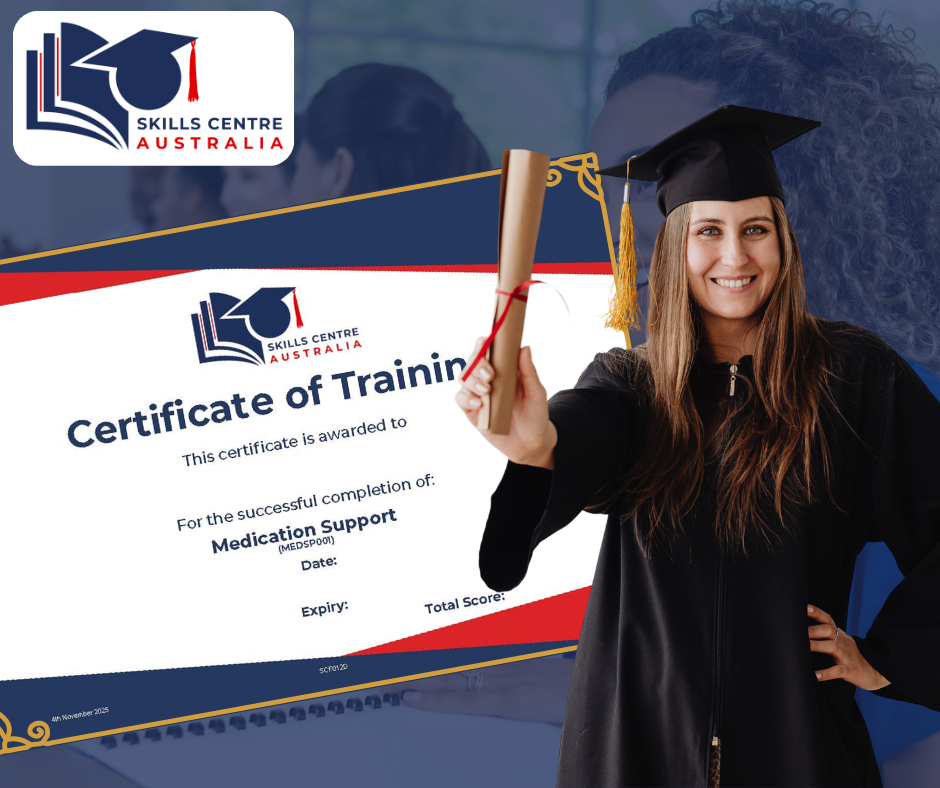
Skills Centre Australia’s training documentation includes, course titles, completion dates, expiry dates, a certificate of completion, and competency assessments. We also keep up to date records of staff attendance.
Skills Centre Australia helps organisations to ensure records are easily accessible and regularly reviewed for accuracy.
Common Audit Preparation Tips
Preparing for an audit does not need to be overwhelming. Some practical steps include:
- Conduct Internal Training Reviews
- Regularly review staff training records to identify any gaps before an audit occurs.
- Check Expiry Dates
- Ensure mandatory training, First Aid certifications, CPR qualifications, and other time-sensitive credentials remain current.
- Match Training to Roles
- Confirm that workers performing specialised tasks have the relevant qualifications and competency assessments on file.
- Maintain Clear Documentation
- Store training records in a centralised and accessible location.
- Review Policies and Procedures
- Ensure staff training aligns with current organisational policies and industry requirements.
- Encourage Staff Confidence
Workers should understand how their training supports their role and be comfortable discussing this with auditors if required.
Taking these proactive steps helps create a strong foundation for audit ready training across the organisation.

How Skills Centre Australia Helps Providers Stay Audit Ready
Achieving and maintaining compliance is much easier when staff have access to high-quality, industry-relevant training, like through Skills Centre Australia.
At Skills Centre Australia, we work with aged care, disability support, community services, and healthcare providers to deliver practical training that supports both workforce capability and compliance requirements.
Our training programs cover many of the areas auditors commonly review
By partnering with Skills Centre Australia, organisations can strengthen their workforce, improve service quality, and build confidence that they will be audit ready.
Audits should not be viewed as something to fear. Instead, they provide an opportunity to demonstrate the quality, safety, and professionalism of your organisation.
By focusing on person-centred care, maintaining current compliance training, ensuring staff competency, and keeping accurate records, providers can significantly improve their audit readiness.
Being ready not only helps meet auditor expectations but also supports better outcomes for clients.
With Skills Centre Australia and a commitment to continuous improvement, organisations can be prepared for audits at any time and continue delivering exceptional care with confidence.