
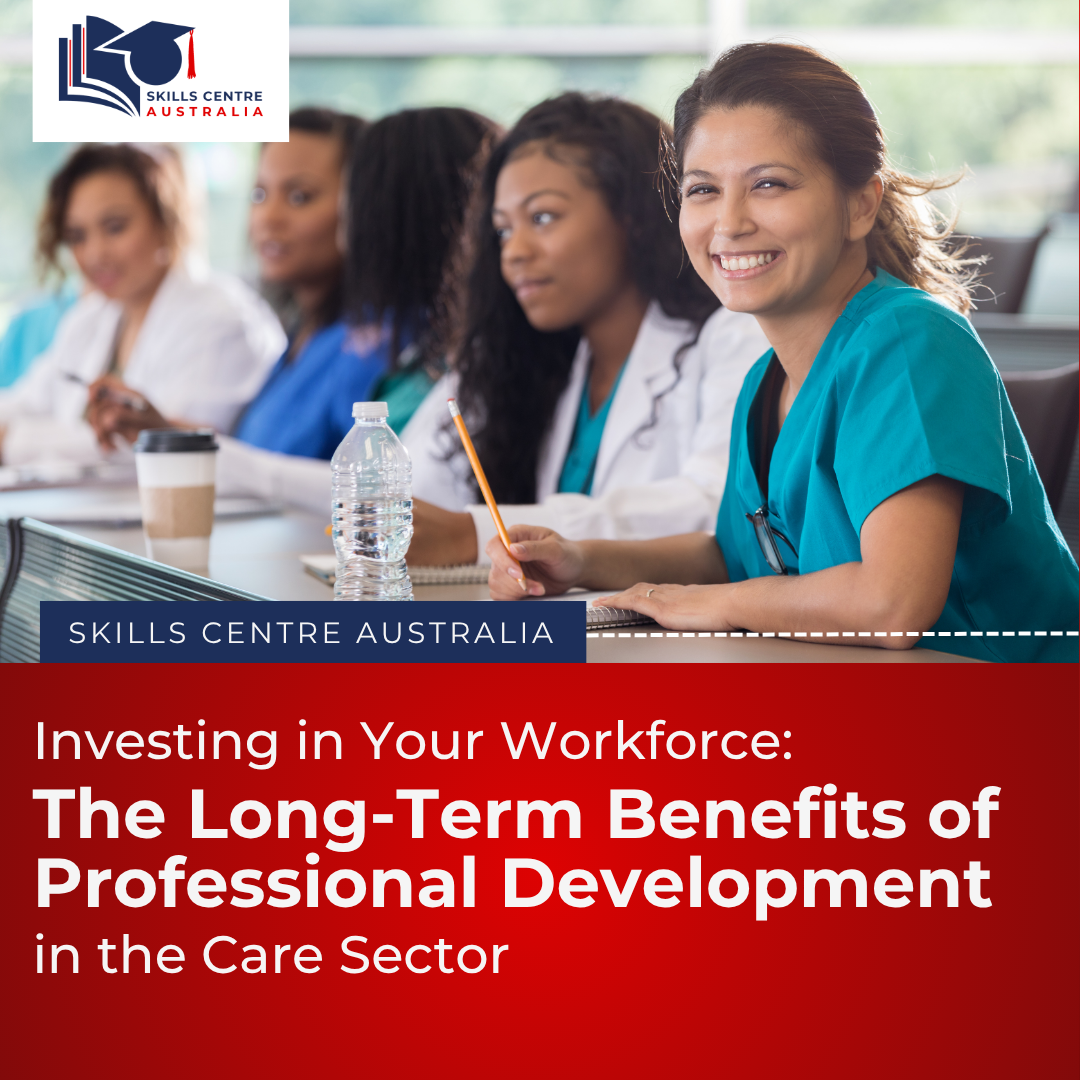
Professional development for aged care and disability support workers is more than a compliance requirement.
For Australian care providers, investing in ongoing workforce training can strengthen staff capability, improve service quality and help employees build the skills and confidence they need to support clients safely and effectively.
In a sector where client needs, regulations, and best practice continue to evolve, professional development for aged care and disability support workers should be viewed as a long-term investment in your people and the future of your organisation.
Why Professional Development for Aged Care and Disability Support Workers Matters
Aged care and disability support workers play an important role in the lives of the people they support. From personal care and medication assistance to manual handling and complex support needs, workers need practical skills and current knowledge to perform their roles effectively.
Ongoing training helps workers stay up to date while giving organisations an opportunity to identify and address skills gaps across their workforce.
Rather than treating training as something that only needs to happen during induction, providers can benefit from creating a culture of continuous learning and professional development.

Build a More Skilled and Confident Workforce
One of the biggest benefits of professional development for aged care and disability support workers is increased staff confidence.
Practical, relevant training gives support workers the opportunity to develop their knowledge and practise skills that directly relate to their roles. Whether training covers manual handling, medication and administration, personal care or complex care, building these capabilities can help workers feel better prepared for real-world situations.
For providers, a more confident workforce can contribute to safer, more consistent and higher-quality support.
Improve Quality and Consistency of Care
Consistent training can help establish a strong foundation for how services are delivered across an organisation.
This is particularly important for providers with larger teams or workers operating across multiple client environments. Staff training for aged care and disability providers can help ensure employees understand organisational procedures, professional expectations and safe work practices.
Training can support staff to develop a shared understanding of:
- Person-centred care
- Safe work practices
- Risk management
- Communication and professional boundaries
- Infection prevention and control
- Client dignity, choice and independence
- Relevant legislation and industry standards
Consistency doesn’t mean every client receives the same support. Instead, it gives workers the knowledge and skills to provide individualised support within safe and professional frameworks.
Support Better Outcomes for Clients
At the centre of workforce development is the quality of support provided to clients.
The NDIS Review has highlighted the importance of training and career development opportunities for disability support workers, recognising the role of a capable workforce in delivering quality support. Similarly, ongoing learning is an important part of developing a skilled aged care workforce in Australia.
When workers have appropriate training and practical skills, they are better equipped to understand individual needs, identify potential risks and provide support that promotes safety, dignity and independence.
Investing in professional development for aged care and disability support workers, therefore, benefits not only employees, but also contributes to better experiences and outcomes for the people your organisation supports.

Improve Staff Retention and Career Development
Professional development can also play an important role in employee engagement.
Workers who are given opportunities to develop new skills and expand their knowledge may feel more valued and supported in their roles. Training can also provide pathways for employees who want to take on additional responsibilities or develop specialist skills.
For care providers, creating opportunities for professional growth can help build a stronger workplace culture while supporting the retention of experienced staff.
This makes workforce development an important consideration when looking at the long-term sustainability of your organisation.
Prepare Your Workforce for Industry Changes
The Australian care sector is continually changing. New standards, legislation, technologies, client needs and approaches to care can all influence the way organisations operate.
Regular professional development helps organisations stay proactive rather than waiting until staff urgently need new skills.
Providers may benefit from regularly reviewing whether their teams need refresher training or additional skills in areas such as:
- Complex care
- Medication assistance
- Manual handling
- Infection control
- Personal care
- Safeguarding and restrictive practices
- First aid and CPR
A regular approach to workforce training can help organisations identify skills gaps early and ensure their teams are prepared for changing demands.

Make Training Part of Your Workforce Strategy
Effective professional development for aged care and disability support workers isn’t necessarily about completing as many courses as possible. It’s about identifying the right training for your organisation and your workforce.
Start by asking:
Where are our current skills gaps?
Identify areas where staff may need additional training, practical skills or refresher courses.
What do our clients need?
Consider whether changing or increasingly complex support needs require new capabilities within your team.
What do our employees want to learn?
Speaking with staff can help identify areas where they would like to build confidence or progress professionally.
Are our current skills up to date?
Regularly review training requirements rather than relying solely on initial induction.
Can we train our team together?
Group training can be an efficient way for providers to build consistent knowledge and skills across their workforce.
The Long-Term Value of Investing in Your Workforce
It can be tempting to view staff training as an operational expense. However, the long-term value extends well beyond the cost of a course.
Every training opportunity can contribute to a more capable workforce, stronger workplace culture and greater confidence among staff. It can also help organisations respond to changing industry expectations while maintaining a strong focus on quality and client outcomes.
For aged care and disability providers, professional development for aged care and disability support workers is ultimately an investment in the people who deliver your services every day.
Build a Stronger Workforce with Skills Centre Australia
At Skills Centre Australia, we provide practical training designed to help aged care and disability support organisations develop the skills and knowledge of their workforce.
From support worker fundamentals and manual handling to medication assistance and complex care skills, our training options can help providers address workforce development needs across their teams.
Whether you’re onboarding new employees, refreshing existing skills or developing a comprehensive workforce training strategy, investing in professional development for aged care and disability support workers can help build a stronger organisation for tomorrow.
Ready to invest in your workforce?
Contact Skills Centre Australia on (08) 8340 6875 or info@kcskillscentre.com.au to discuss training options for your team.