
In aged care and disability care, WHS (work health and safety) is part of everyday care. Support workers may assist with transfers, personal care, medication, mobility, meal preparation, behavioural support and a wide range of other tasks, often in environments that can change from one client to the next.
When WHS practices in aged care and disability care are overlooked, the consequences can extend far beyond the day’s incident.
For providers, poor WHS practices can affect workers, clients, compliance, workforce stability, service quality and the organisation’s bottom line.
This National Safe Work Month, it’s worth asking: what could poor WHS practices be costing your organisation?

1. The cost of workplace injuries
Manual handling and people handling are significant risks across the care industry. Workers may regularly lift, support, reposition or transfer clients, sometimes in awkward environments or without the right equipment or assistance.
Safe Work Australia identifies people handling as one of the most common causes of musculoskeletal disorders in healthcare and social assistance. Its data shows that the nursing, care and support workforce experienced a serious-claim frequency for musculoskeletal injuries 2.3 times the national average in 2022–23.
For a provider, a workplace injury can mean:
- Workers’ compensation costs
- Staff absence and replacement costs
- Disruption to rosters and client services
- Increased pressure on other team members
- Lost productivity
- Potential investigations and regulatory consequences
But the highest cost is the impact on the injured person.
2. The cost of inadequate training
In care, having a qualification or completing an induction doesn’t necessarily mean a worker is prepared for every situation they may encounter.
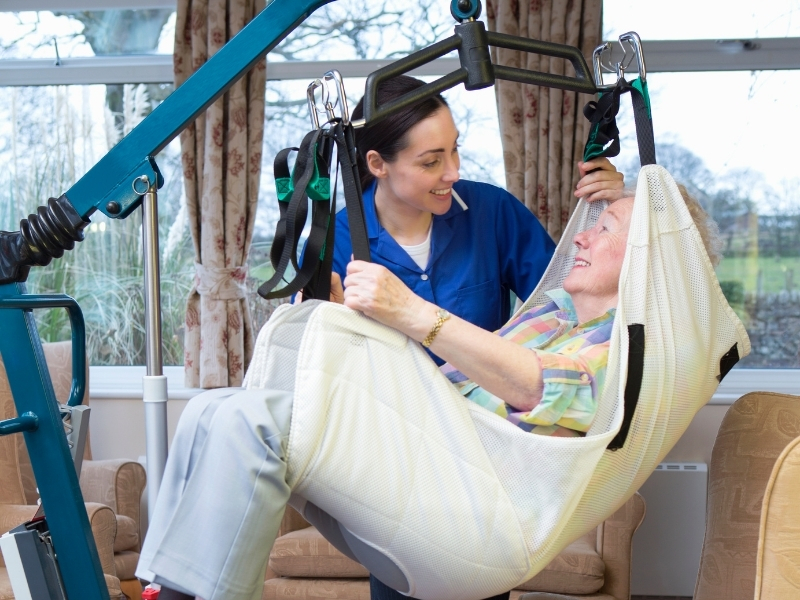
Workers need appropriate information, training, instruction and supervision to perform their work safely. This is especially important when staff support people with complex needs or use equipment such as hoists and other mobility aids.
Safe Work Australia’s healthcare and social assistance guidance includes a case study in which a disability support worker was not adequately trained to use available assistive equipment. The worker tried to use a hoist that hadn’t been properly set up, resulting in injury to the client.
This highlights an important point for providers:
Training isn’t simply about ticking a compliance box. It’s about giving workers the practical skills to recognise risks and perform tasks safely.
3. The cost of preventable incidents
A workplace incident can affect more than the worker involved.
In aged care and disability support, an incident may also affect the person receiving care — particularly when a task involves mobility, personal care, medication, complex support or behavioural needs.
Poor practices can include:
- Using unsafe manual handling techniques
- Working outside a worker’s level of training or competence
- Failing to use appropriate equipment
- Not following established procedures
- Inadequate communication between workers
- Failing to report hazards and near misses
- Allowing outdated or ineffective procedures to continue
These risks can be particularly challenging for providers delivering support in clients’ homes, where the work environment can vary significantly from one location to another. Safe Work Australia notes that WHS duties apply wherever workers are working, including clients’ homes and vehicles travelling between work sites.
4. The cost to workforce wellbeing
Safety isn’t only about preventing physical injuries.
Care workers can also experience psychosocial hazards including excessive workloads, poor support, workplace violence, bullying, harassment, fatigue and working in isolation.
For disability support workers and aged care workers, this can be particularly relevant when working alone, supporting people with complex needs or responding to challenging behaviours.
When workers don’t feel supported or safe, providers may experience increased absenteeism, staff turnover, fatigue and difficulty maintaining a stable workforce.
Safe Work Australia specifically identifies inadequate staffing, lack of support, unclear information and working alone as potential psychosocial hazards within healthcare and social assistance.

5. The cost to service quality
Safe work practices and quality care go hand in hand.
A worker with the right training, equipment, information, and support is better positioned to provide safe, consistent support.
On the other hand, when workers are rushed, inadequately trained or expected to perform tasks without the appropriate support, the risks can affect both worker safety and client outcomes.
This is why WHS shouldn’t be treated as something separate from service delivery. In care, safe work is part of good care.
6. The cost of compliance and reputation
For providers, poor safety practices can also create regulatory and reputational risks.
Effective WHS in aged care and disability care requires providers to identify hazards, assess risks, implement appropriate controls, and regularly review whether those controls remain effective. They also have duties to consult with workers and provide appropriate training, instruction and supervision.
A serious incident may lead to investigations, corrective actions, increased scrutiny or other regulatory consequences, depending on the circumstances and jurisdiction.
There’s also the reputational impact.
Clients, families, workers and referral partners expect care providers to take safety seriously. A strong safety culture can help demonstrate that an organisation is committed not just to meeting its obligations, but to protecting the people who rely on its services.

So, what is poor safety really costing?
It can be tempting to think of WHS training and safety procedures as another operational expense.
But not investing in safety can cost much more.
For care providers, proactive safety can help reduce the likelihood and impact of:
Injuries → Staff absence → Roster disruption → Workforce pressure → Service disruption → Increased costs
The alternative is to build safety into the way your organisation operates every day.
That means regularly reviewing risks, listening to workers, keeping procedures current, maintaining equipment, monitoring incidents and near misses, and making sure staff have the skills and knowledge required for the work they perform.
Make safety part of your workforce strategy
National Safe Work Month 2026 has the theme “Safe work is for life”, highlighting that WHS is about more than preventing harm in the moment; it’s about protecting workers’ lives, health and future.
For aged care and disability providers, that means looking beyond mandatory requirements and asking:
- Are our workers confident and competent?
- Are we giving them the right training for the people they support?
- Are we keeping skills current?
- Are we identifying risks before they become incidents?
- Are we creating a workplace where workers feel comfortable speaking up about safety?
Because ultimately, investing in safe work practices isn’t just an investment in compliance; it’s an investment in your people, your clients and the future of your organisation.

What can providers do?
- Keep mandatory and role-specific training current
- Regularly refresh manual handling and equipment skills
- Make sure workers are trained for the complexity of the clients they support
- Review incidents and near misses
- Encourage workers to report hazards
- Regularly review procedures and risk controls
- Provide appropriate supervision, instruction and support
Build a safer, more capable workforce with Skills Centre Australia
Skills Centre Australia provides training designed for the care industry, helping organisations build workforce capability across essential and specialised skills.
From First Aid and CPR through to Manual Handling and Medication Administration, ongoing training can help your team stay prepared for the responsibilities of modern aged care and disability support.