
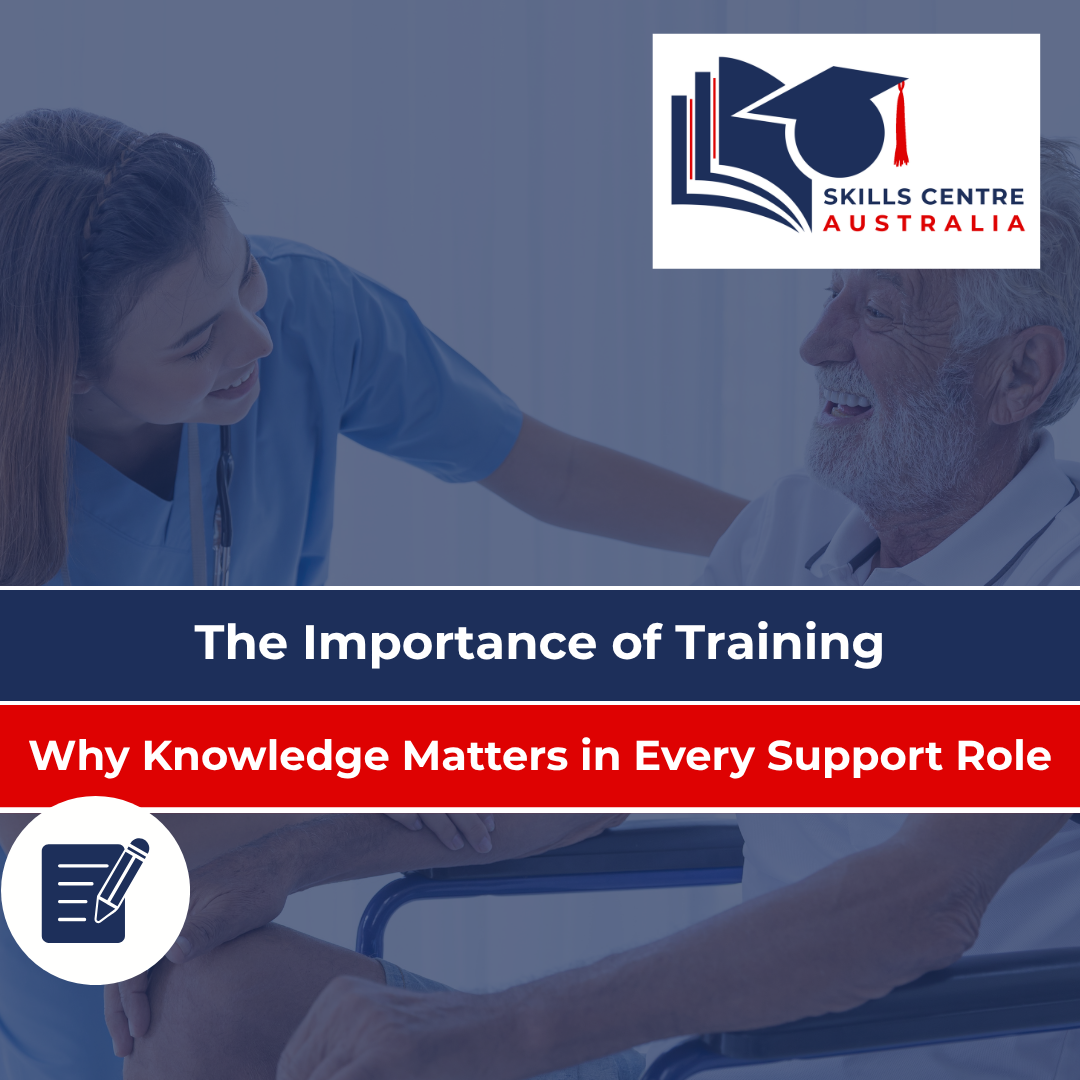
Why Support Worker Training Matters Beyond the Task
When people think about the importance of training, they often focus on the specific tasks a worker is employed to perform. This might include personal care, medication support, meal preparation, domestic assistance, community access or social support.
However, effective support is about much more than simply completing a list of tasks.
Even when a support worker is not directly responsible for managing a client’s health condition or completing a particular clinical task, having relevant knowledge and training can make an enormous difference. Understanding a client’s individual needs, potential risks and what to do in an emergency can help workers recognise when something is wrong and respond appropriately.
At Skills Centre Australia, we believe that quality support worker training helps build safer, more confident and better-prepared workforces. Because when supporting people in their own homes and communities, you never know when you’ll need your knowledge.

Why the Importance of Training Extends Beyond the Task You’re Completing
Consider a support worker providing domestic assistance and social support to a person living with diabetes.
The worker may not be responsible for administering insulin or directly managing the person’s diabetes. Their role might simply involve helping with cleaning, shopping, attending appointments or participating in the community.
So, why would diabetes training matter?
Because emergencies and unexpected situations do not always happen during a scheduled clinical task.
Imagine the client suddenly becoming confused, shaky, sweaty or unusually tired while out shopping. A worker with relevant knowledge is more likely to recognise these symptoms as potential signs of low blood glucose and understand that the situation requires immediate attention.
Without appropriate awareness, these warning signs could potentially be mistaken for tiredness, stress or simply “having a bad day”.
This is where broader support worker training becomes so important. Training can help workers recognise potential warning signs, remain calm, follow workplace procedures and seek appropriate assistance.
The goal is not to expect every support worker to become a nurse or healthcare professional. Instead, it is about ensuring workers have the knowledge relevant to the people they support and know when to escalate concerns.

The Importance of Training for Responding Confidently in an Emergency
Emergencies can be stressful, particularly when they happen unexpectedly.
A worker who has never encountered a particular health condition or emergency situation may understandably feel unsure about what they are seeing or what steps they should take.
Relevant training can build awareness of potential risks, confidence in recognising changes in a client’s condition, understanding of emergency and escalation procedures, knowledge of when to seek additional help, and a stronger understanding of individual support needs.
Confidence is particularly important for workers providing support independently in a client’s home or out in the community.
Another staff member may not always be nearby to ask for help. Having the right support worker training can help workers feel more prepared to respond appropriately while following their organisation’s policies and procedures.

Understanding the Importance of Training Across Different Support Scenarios
Diabetes is just one example. Training can benefit a worker in many situations, even if they are not directly responsible for managing a particular condition.
Epilepsy and Seizure Awareness
A support worker providing community access may not be responsible for managing epilepsy as part of their usual role. However, if the person they support experiences a seizure while attending the shops, visiting friends or travelling in the community, the worker needs to know how to respond safely.
Epilepsy and Seizure training through Skills Centre Australia can help workers understand what a seizure may look like, what to do during the event and when emergency assistance may be required.
First Aid Awareness
Imagine supporting a client during a social outing or helping them prepare a meal. The worker may not expect an emergency, but severe allergic reactions can develop quickly.
Understanding the signs of anaphylaxis and knowing the appropriate emergency first aid response can be critical. First Aid Training can help workers recognise symptoms and act quickly, in line with workplace procedures and emergency plans.
Dysphagia and Mealtime Awareness
A worker may be employed primarily to provide companionship, domestic support or community access. However, food and drinks often form part of everyday life.
If a client has swallowing difficulties, workers need to understand the importance of following individual mealtime plans and recognising potential signs of distress.
Even if the worker is not responsible for assessing swallowing difficulties, appropriate support worker training can help them understand why specific food textures, fluid consistencies, and support strategies matter.
Dementia Awareness
Supporting a person living with dementia can involve much more than completing practical tasks.
A support worker completing domestic assistance may notice that a client who is usually organised has become increasingly confused or is struggling to complete familiar routines. A worker providing social support may notice changes in communication, mood or behaviour.
Training can help workers better understand dementia, communicate respectfully and recognise changes that may need to be reported to a supervisor, family member or healthcare professional.
Infection Prevention and Control
Infection prevention is another area where training benefits every worker, regardless of their specific role.
A worker may not provide clinical care, but they may still enter multiple homes, assist with household tasks, or support people who may be more vulnerable to illness.
Understanding hand hygiene, cleaning practices, personal protective equipment and infection prevention procedures can help protect clients, workers and the wider community.

The Importance of Training in Recognising Changes in Clients
One of the most valuable benefits of ongoing support worker training is the ability to recognise when something is different.
Support workers often spend significant time with clients and may notice subtle changes before anyone else does.
This could include changes in mobility, increased confusion, changes in appetite, unusual tiredness, changes in mood or behaviour, difficulty communicating, new symptoms, discomfort or a decline in a person’s ability to complete everyday tasks.
Training does not mean workers should diagnose a health condition. However, it can help them recognise that something may not be right and understand the importance of documenting and escalating concerns.
Early recognition and communication can play an important role in helping clients access the right support.

Why the Importance of Training Leads to Better Person-Centred Care
Every client is different.
Two people living with the same diagnosis may have completely different needs, abilities, routines and support requirements. This is why support worker training should always be combined with person-centred support planning and clear communication.
Training gives workers foundational knowledge, while individual support plans help them understand how that knowledge applies to the person they support.
Together, this can help create safer and more personalised care.
A well-trained worker is better positioned to understand why certain routines matter, why individual preferences should be respected and why support plans need to be followed consistently.

Creating a Culture of Continuous Learning
The world of disability, aged care and community support is constantly evolving. New practices, updated guidelines and changing client needs mean that learning should not stop once a worker completes their initial qualifications.
Ongoing support worker training gives organisations the opportunity to strengthen skills, address knowledge gaps and ensure workers feel prepared for the realities of their role.
It also sends an important message to employees: we value your knowledge, confidence and ability to provide safe, high-quality support.
When organisations invest in training, they are also investing in the people receiving support.

How Skills Centre Australia Can Help
At Skills Centre Australia, we understand that great support workers need more than a basic understanding of the tasks listed in their position description.
They need knowledge, confidence and practical skills that help prepare them for the unexpected.
Our training courses help workers and organisations build capability across a range of areas, creating more confident teams and safer support environments.
Whether your staff provide personal care, domestic assistance, social support or community access, relevant training can help ensure they have the knowledge to recognise potential risks and respond appropriately within their role.
Because sometimes the most important thing a worker does is not the task they were originally scheduled to complete. Sometimes, it is noticing that something has changed. Sometimes, it is recognising the warning signs of an emergency. And sometimes, having the right knowledge at the right time can make all the difference.
Investing in support worker training through Skills Centre Australia means investing in safer, more confident and better-prepared care.