
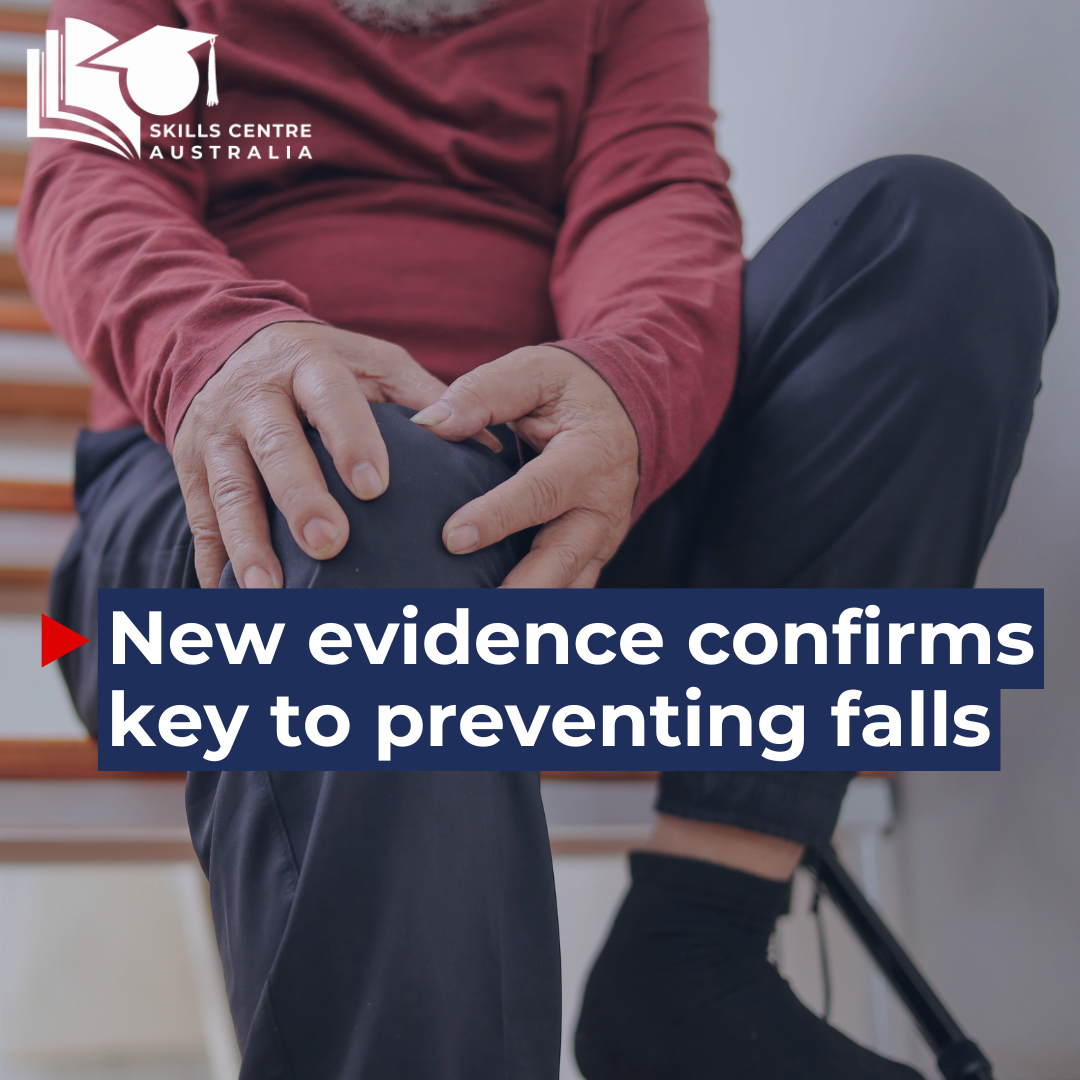
New research led by Flinders University has found personalised exercise programs, vitamin D supplements, and improved nutrition are among the most effective strategies for preventing falls among aged care clients.
The international review, published by the Cochrane Collaboration, analysed more than 100 clinical trials involving nearly 69,000 older adults across 25 countries.
It identified clear, evidence-based actions that can help clients stay mobile, confident, and independent for longer; insights that align with the growing emphasis on professional skills training across the sector.
At Skills Centre Australia, we continuously review emerging research and update our training programs to ensure we provide learning that is current and informed by evidence.

A tailored approach to safety
Falls remain one of the most serious health risks in aged care, often resulting in fractures, hospital stays, and a long-term loss of independence.
The study highlights that fall prevention is most successful when strategies are tailored to individual residents, rather than applied as a one-size-fits-all solution.
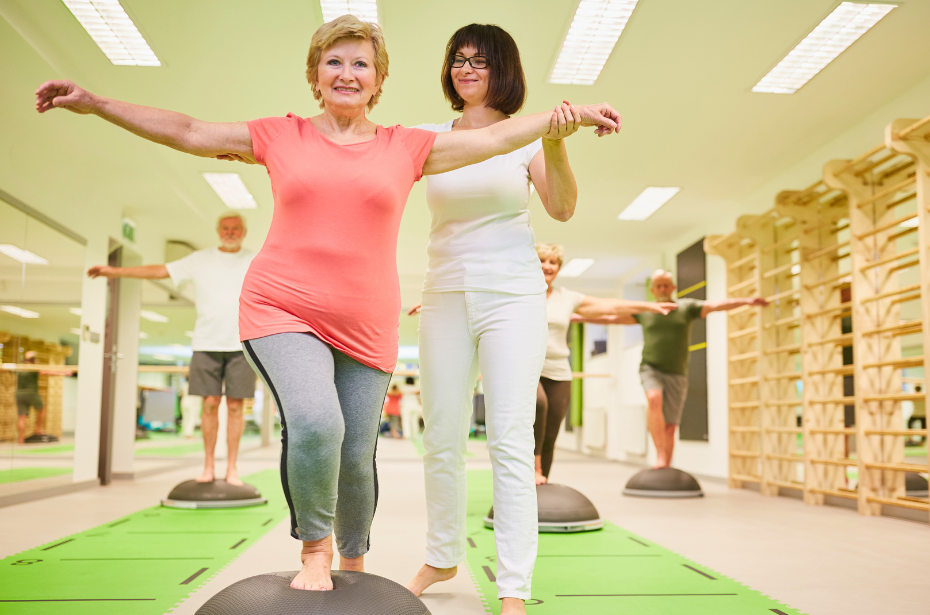
Personalised exercise programs (particularly those that build strength, balance, and coordination), were found to be among the most effective interventions.
Even clients with cognitive conditions, such as dementia, experienced fewer falls when engaging in regular, supervised sessions, particularly when these were group-based or exceeded beyond an hour each week.
Training providers like Skills Centre Australia, who specialise in aged care and disability education, are helping bridge the gap between research and practice by preparing workers with the knowledge to deliver care safely and confidently.
Nutrition and vitamin D play vital roles
Many older Australians, particularly those who live in residential care, have low vitamin D levels, affecting muscle strength and bone density.
Supplementing vitamin D was shown to reduce overall fall rates, while improving calcium intake through dairy foods such as milk, cheese, and yoghurt further strengthened bone density.
The combination of better nutrition and regular exercise created a significant reduction in both falls and fractures across participating facilities.
The role of aged care workers
Staff engagement was another key factor. The review found that when aged care workers were actively involved in implementing individualised prevention plans (like conducting environmental assessments, reviewing medications, and supervising exercises), outcomes improved significantly.
While some standalone initiatives, such as medication reviews or isolated staff training, showed limited effectiveness on their own, their impact grew substantially when integrated into broader, client-focused care models.
This reinforces the importance of professional development programs that teach workers how to combine clinical insight with hands-on care, a core focus of Skills Centre Australia’s approach.
These findings reinforce the importance of comprehensive, multi-layered fall-prevention programs combining physical, nutritional, and environmental strategies.
By integrating tailored exercise, dietary support, and strong staff participation, aged care providers can significantly reduce risks.
As Australia’s aged care sector continues to evolve, the challenge lies not only in understanding the evidence, but applying it.
For training organisations, like Skills Centre Australia, this means preparing the next generation of support workers to deliver person-centred, evidence-informed care to keep older Australians safer, stronger, and more independent for longer.